
SMART Material Hub
From fungi to cooling metals – the SMART Material Hub focuses on innovative materials in the pursuit of a greener industry. Touch, feel, and get inspired alongside the experts.
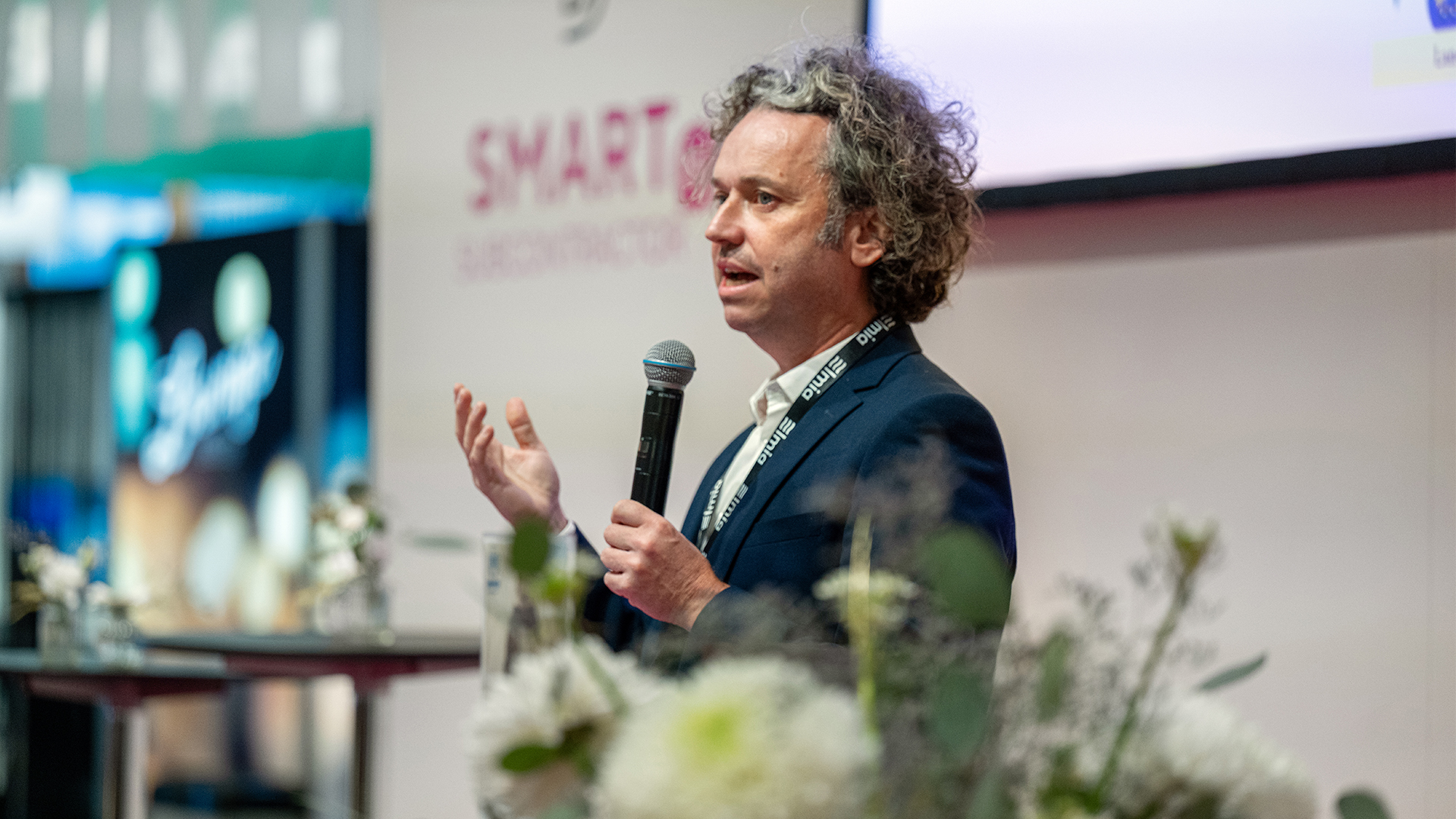
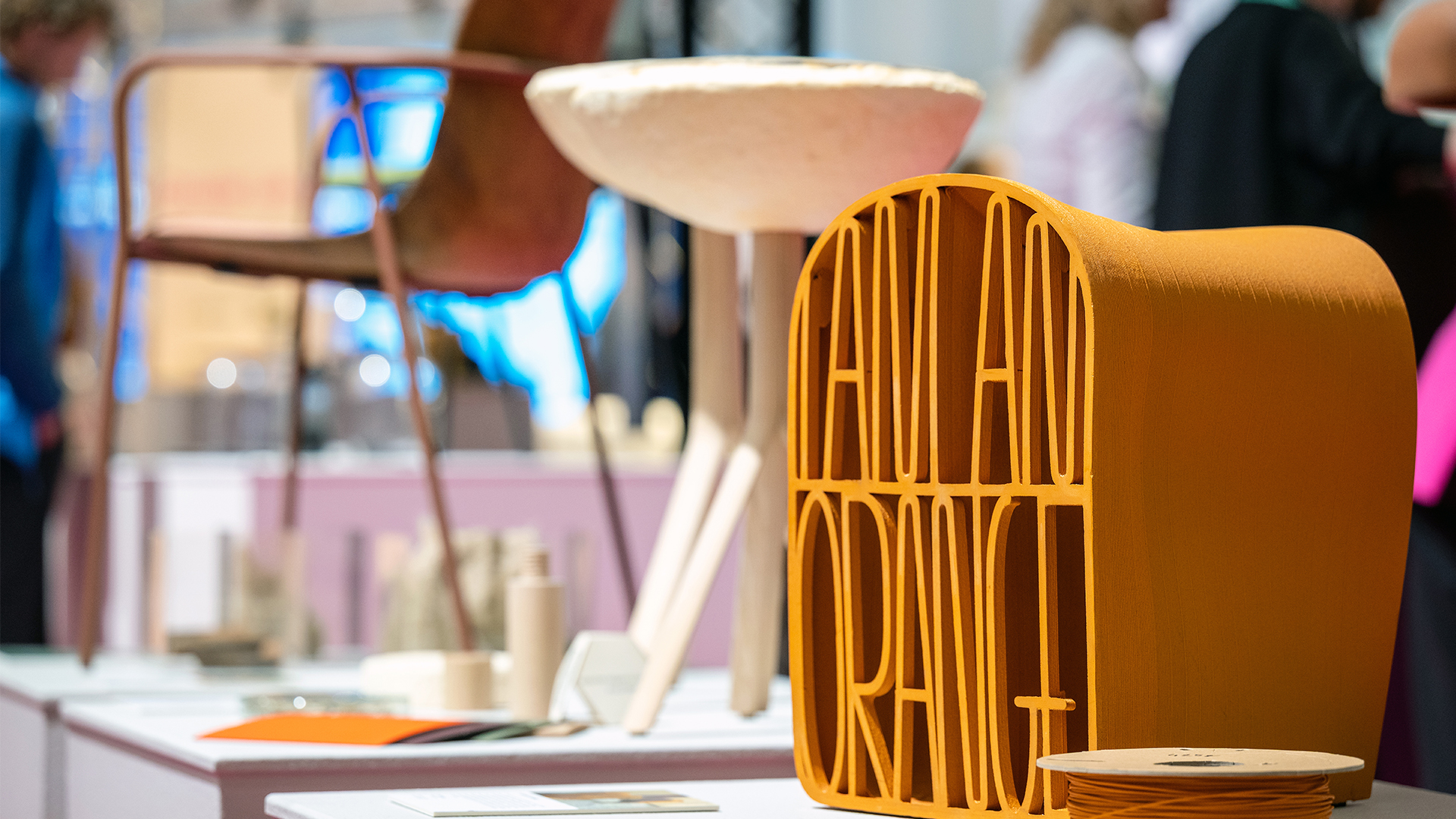
From biodegradable polyurethane and carbon fibres derived from wood industry resources to battery graphite made from CO₂. When Dr Sascha Peters and Haute Innovation return to Elmia Subcontractor for the 13th year, they bring 50 material-based innovations from 15 countries to the SMART Material Hub – showcasing how new materials can open up new possibilities while contributing to a more resilient industry.
Dr Sascha Peters has been following developments in materials and technologies for many years. Right now, he sees two areas in particular driving material innovation: multi-material solutions integrating smart functions, and advanced biomaterials with the potential to replace traditional materials in industrial production.
Among the examples presented at the SMART Material Hub is a rocket engine combustion chamber manufactured using additive technologies and combining a chromium-zirconium-copper alloy with maraging steel. For furniture manufacturing, Peters also highlights new binding mechanisms that replace synthetic adhesives with bio-circular binders derived from renewable annual crops such as hemp.
– In total, we are showcasing 50 material-based innovations from 15 different countries, says Sascha Peters.
This year’s theme for Elmia Subcontractor is Resilience powered by industry. For Sascha Peters, there is a clear connection between industrial resilience and the materials manufacturers choose – including where the raw materials come from.
– Material innovations, and particularly thinking in terms of material cycles, play a major role in strengthening industrial resilience. Manufacturers would do well to develop solutions based on raw materials that are reliably available in Europe, or that are already abundant in other industrial products and processes.
In the coming years, he believes reducing Europe’s dependence on finite and volatile raw materials will become increasingly important. At the same time, industry needs to make better use of regional resources and enable new forms of circular value creation.
The SMART Material Hub offers several tangible examples. One is carbon fibres for lightweight applications derived from lignin and cellulose from the wood industry. Another is an alternative to carbon black made from micronised olive pit powder, developed by a start-up from Malta.
One of this year’s innovations is something Sascha Peters believes may particularly surprise visitors: biodegradable polyurethane developed by a US-based start-up.
– Who would have thought it possible to manufacture polyurethanes from algae oil and other plant-based raw materials in a way that allows them to decompose naturally? says Peters. The innovation has also received the American Chemical Society’s Green Chemistry Challenge Award in July.
Battery technology is another field where material development is moving rapidly. Here, Peters sees the ambition to reduce dependence on critical raw materials and vulnerable supply chains as an important driver of innovation.
At the SMART Material Hub, visitors will be able to discover CO₂-based battery graphite developed by a Belgian start-up, an ultra-thin solid-state battery for miniaturised electronics from a Swiss start-up, and technology for the large-scale industrial recycling of lithium-ion battery graphite from a Munich-based start-up.
After 13 years at Elmia Subcontractor, Sascha Peters has also seen first-hand how important physical encounters can be when introducing new materials to industry. At the SMART Material Hub, visitors can do more than read about the innovations – they can see them up close, touch them and discuss their possibilities with experts.
– Having material innovations physically on-site, rather than just seeing them in social media posts, represents the major value of trade fairs at a time when face-to-face discussions are becoming increasingly important, especially for innovation processes. We have experienced such conversations again and again over the years, which is why I am incredibly excited to return to Jönköping in November.
- World's first fully biodegradable, high performance polyurethane material (Algenesis Labs, USA): https://www.algenesislabs.com
- Ultra-thin solid-state battery (BTRY Dübendorf, CH): https://btry.ch
- Sound-insulating micro-perforated metamaterial (absora, Berlin): https://www.absora.eco/en
- CO₂-based battery graphite (Astracite, Belgium): https://www.astracite.com
- 3D-printed interior for electric vans (Materialogic, USA): https://www.materialogic.io
- Active Aero Wheel (CompActive, Germany): https://www.compactive.de
- Micronized olive kernel powders as filler for industrial products (Schilling Ltd., Malta): https://www.bio-powder.com/en
- Biodegradable base material for films, coatings, adhesives (traceless, Germany): https://www.traceless.eu