
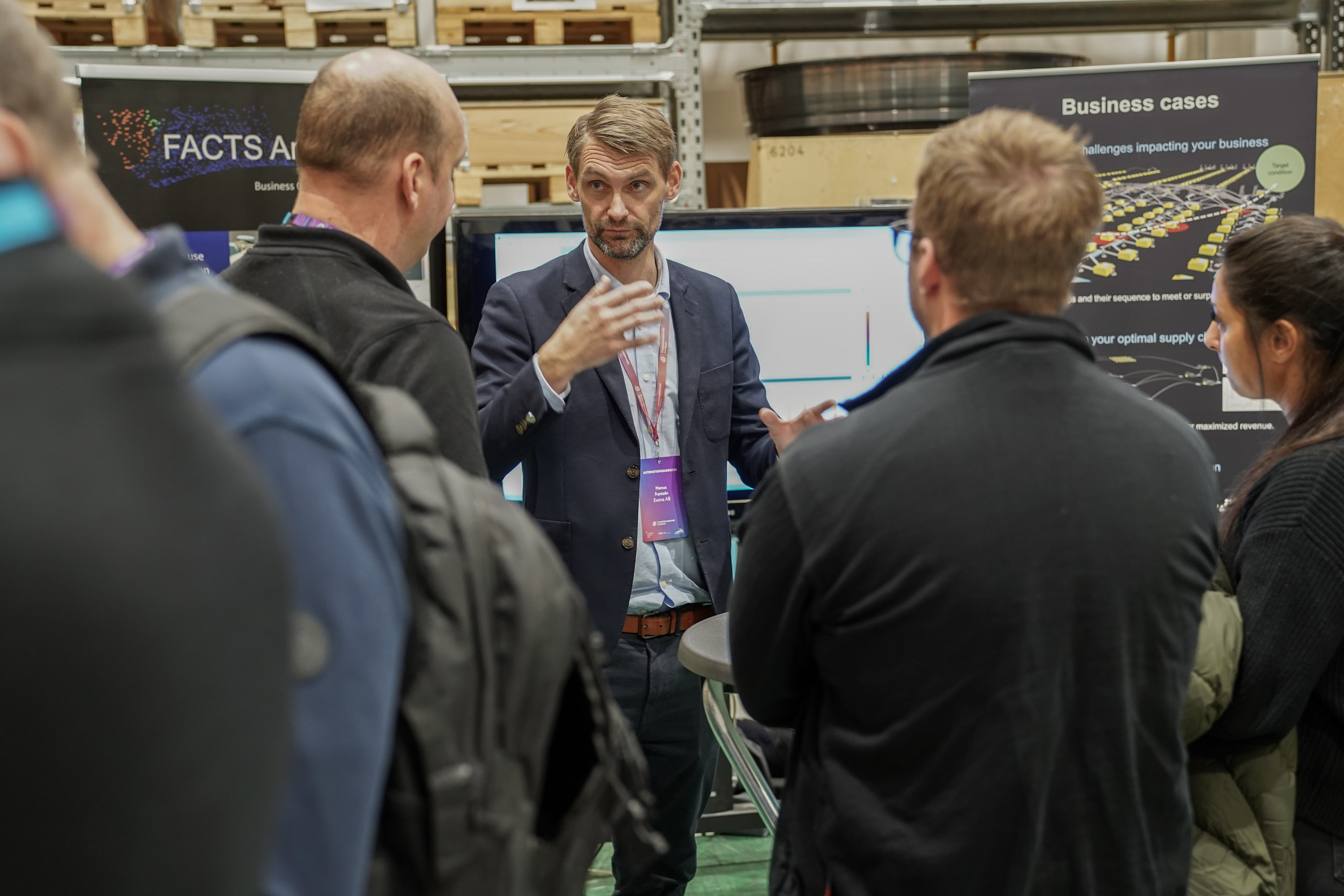
Evoma helps industry make better decisions
More capacity does not always have to mean more machines or bigger investments. Through simulation, digital twins and analysis, Evoma helps manufacturing companies understand how their production actually works – and which changes will have the greatest impact. In November, the company will exhibit as part of IUC Sweden’s collective stand at Elmia Subcontractor.
Do we really need to invest in more capacity? Can the factory handle a planned increase in production volumes? Why are lead times getting longer – and could we produce more with the resources we already have?
These are questions that Marcus Frantzen, CEO of Evoma, often encounters when working with customers.
– We often meet companies in one of three situations: they need to scale up production, improve the efficiency of an existing operation or turn around a negative development. In all three cases, it is about understanding which decisions will have the greatest impact and how resources and investments can be used in the right way.
Testing decisions before they become reality
Evoma draws on more than 20 years of experience in simulation and optimisation. The company works with simulation, digital twins and decision support, and has also developed inFACTS Studio, a software solution for the simulation and analysis of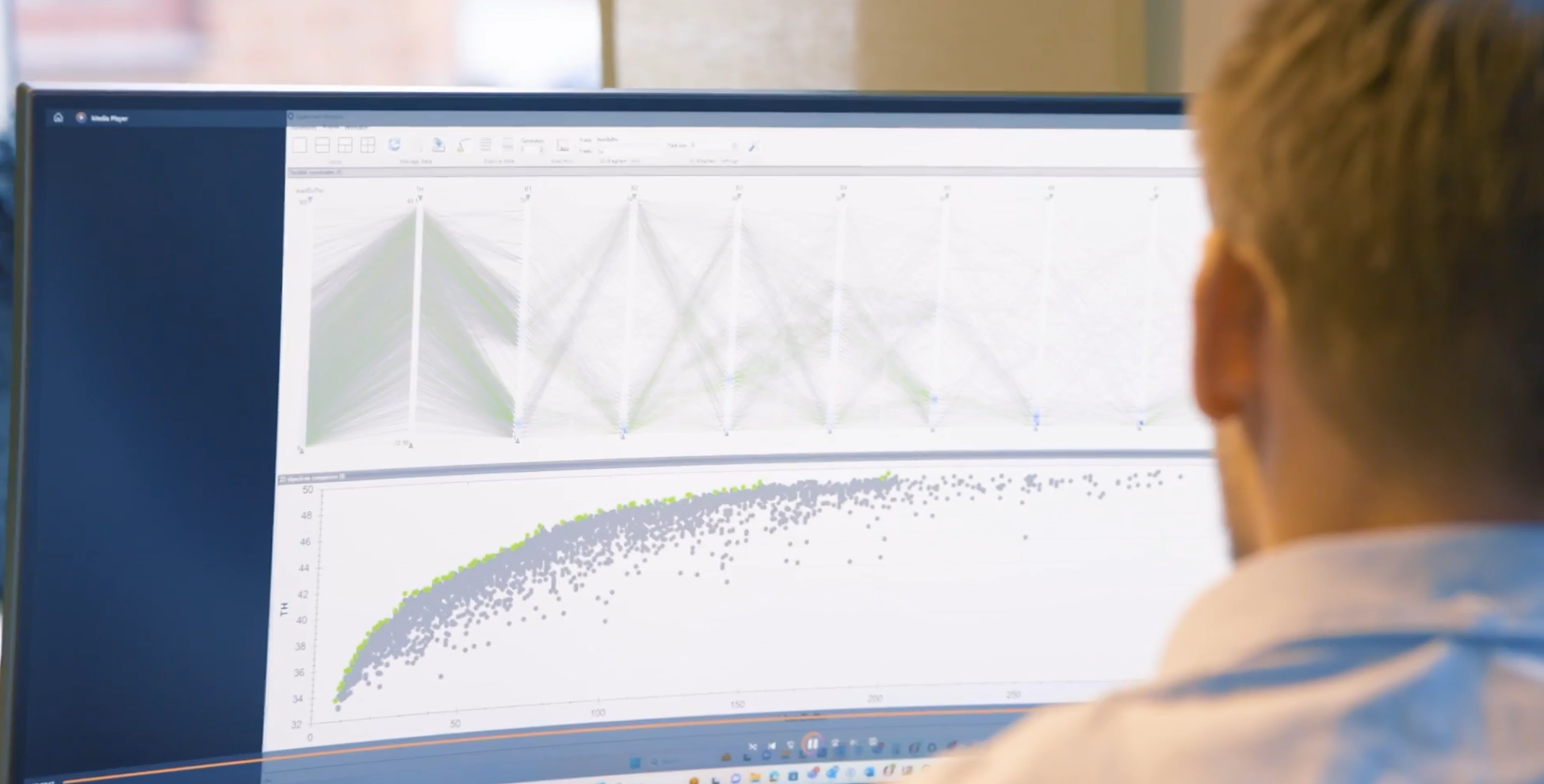 industrial systems.
But technology is not the starting point. The first step is to understand what the company actually wants to achieve. Marcus Frantzen explains:
– What are the company’s goals? Where are the greatest challenges and opportunities? What data is available, and which analyses could create the most value? Technology only comes into play once we know what value we want to create.
Digital technology makes it possible to test different scenarios before changes are implemented in actual production. This can involve anything from staffing and planning to product mix, capacity and major investments.
– Historical data can tell us what has happened, Marcus explains. With simulation, digital twins and scenario analysis, we can also explore what is likely to happen if a company makes a change.
Getting more from existing production
Marcus Frantzen sees the ability to make better use of existing resources as an important factor in the competitiveness of Swedish and European industry.
– There are often significant opportunities to improve existing production without making major investments. It can also be about gaining a clearer understanding of the steps a company needs to take to meet future customer needs or changing conditions.
There is also a clear connection to this year’s Elmia Subcontractor theme, Resilience powered by industry. When conditions change, industry needs both the ability to adapt and the capacity to scale up production when required.
– From a European perspective, we need to safeguard our industrial capacity and retain technology, expertise and innovation in Europe. Given today’s global environment, the ability to adapt and build up production capacity as needs change is becoming increasingly important.
Face-to-face meetings open up different conversations
Evoma had not originally planned to exhibit at Elmia Subcontractor this year. But the opportunity to participate as part of IUC Sweden’s collective stand provided a way into the fair. At Elmia Subcontractor, the company hopes to meet manufacturers and discuss the real challenges they are facing.
– A trade fair creates space for more open conversations where we can listen, ask questions and discuss real problems together, says Marcus.
And although Evoma works extensively with digitalisation, Marcus Frantzen sees particular value in meeting people in person.
– When it comes to making that first connection, building relationships and understanding a company’s real challenges, we still see great value in meeting face to face. Once trust and a shared understanding of the problem have been established, much of the continued work can take place digitally.
Evoma is exhibiting at IUC Sweden’s joint stand in Hall C, at stand C02:20. For more information about them, please see the link.